




Right outside the site
Natural beach
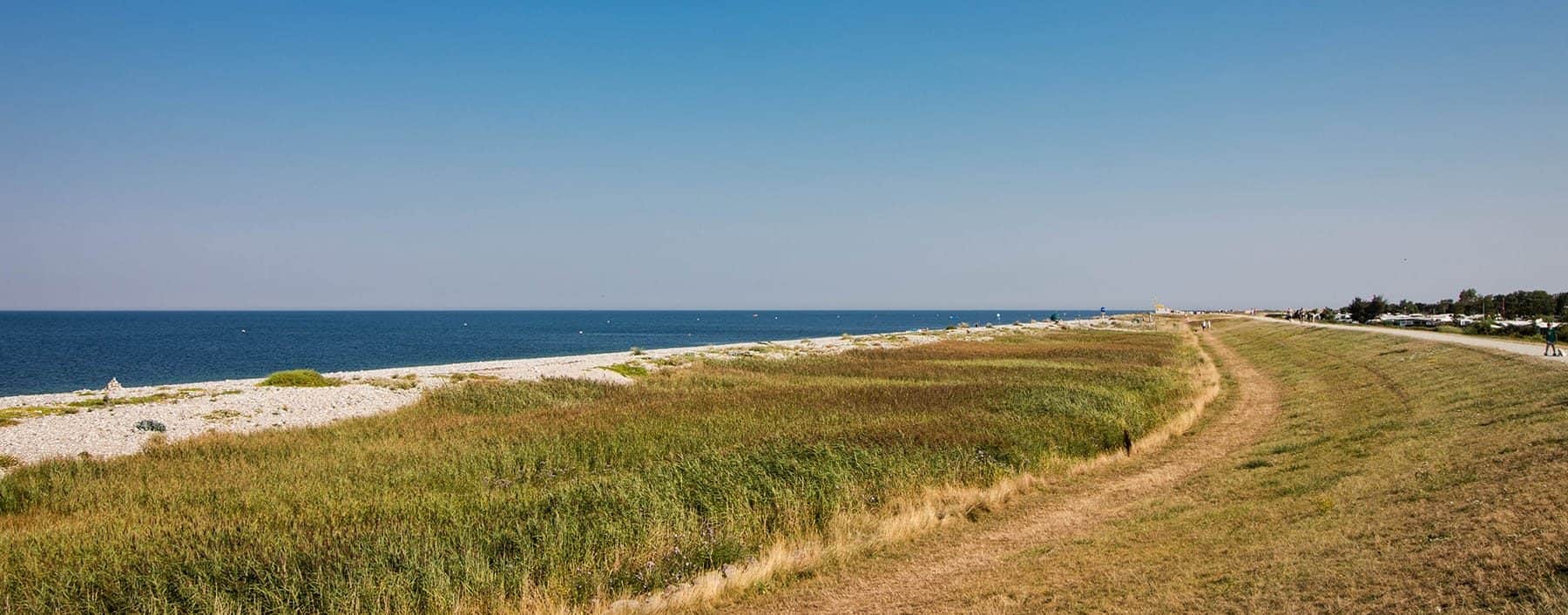
Kilometres of pebbles and stones, no promenade and no concrete. In the evening the sun stands right in front of it.
A genuine natural beachno promenade, no concrete
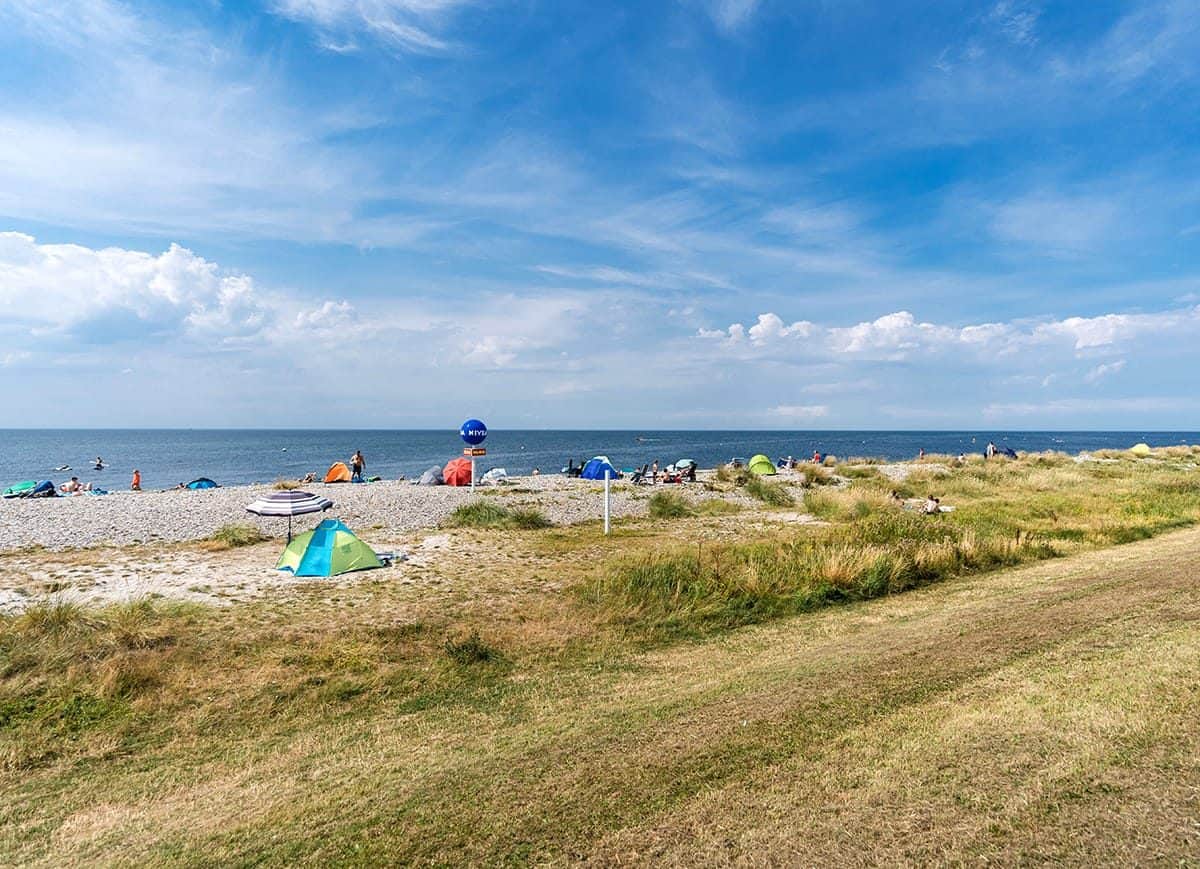
The beach in front of the site is pebbles and stones, and it runs for kilometres in both directions. There is no promenade, no boardwalk and no beach chairs. If you are after sand and a row of hooded chairs, the east coast of the island will suit you better.
How the beach looks on any given day depends on the weather of the past few weeks: fine gravel in places, elsewhere stones you have to watch your footing on. The water level has its say as well. The Baltic has next to no tides, only a few centimetres between high and low water. What actually moves the level is the wind: when it blows from the same direction for days, the water stands much higher or drops well back, and the beach looks different afterwards.
The water shelves gently, which is pleasant with small children and less so with bare feet. Beach shoes count as equipment here, for getting in and for longer walks. The Baltic is saltier than a swimming pool but nothing like the North Sea: you float less well, and your eyes barely sting.
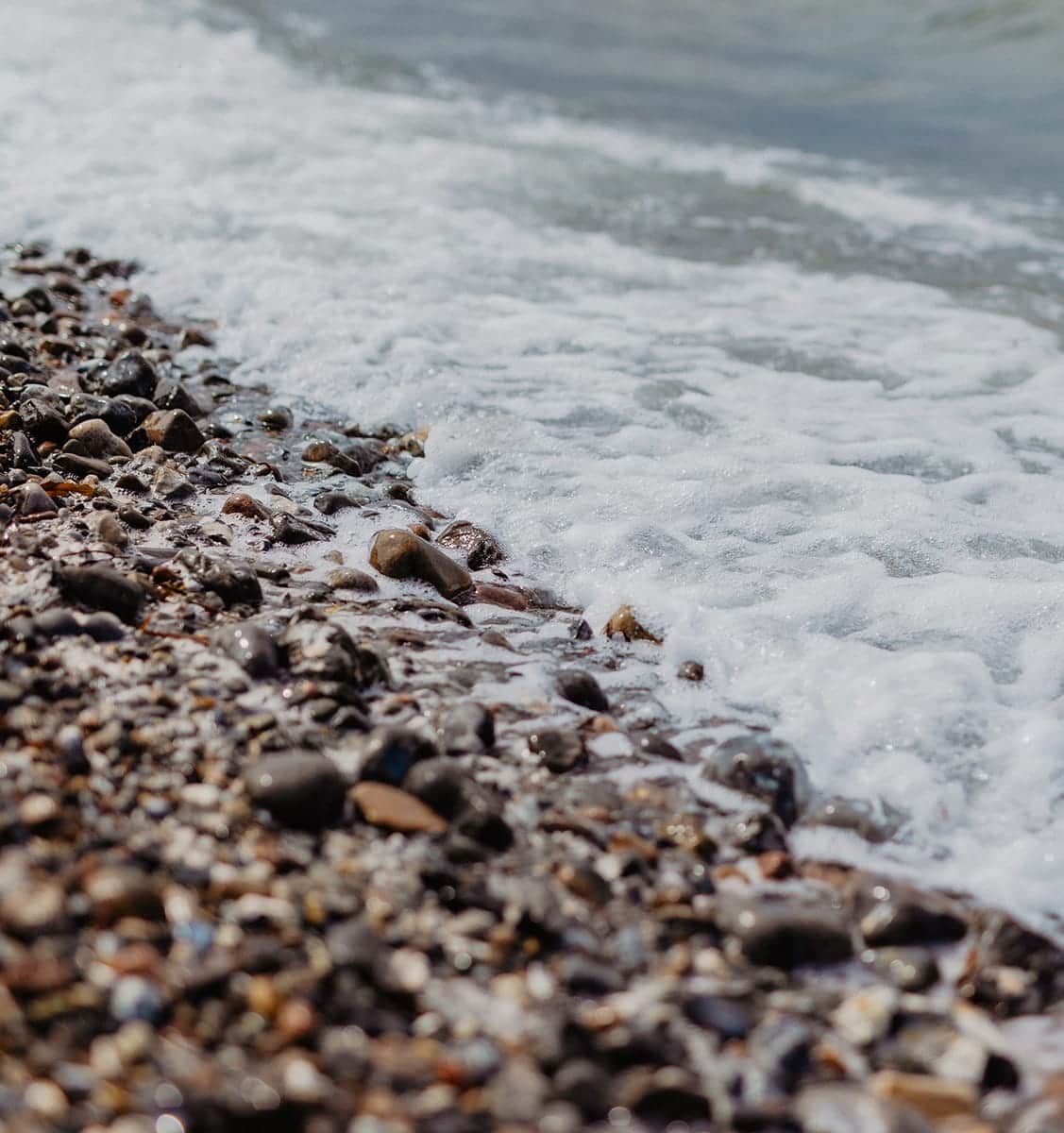
The reserve next door, the sun in the eveningthe moment everyone waits for
The NABU waterfowl reserve at Wallnau begins right next to the beach. From the dyke you notice it mainly in spring, when everything on the site is breeding at once and it gets loud accordingly. You go in through the reserve's own entrance rather than off the beach path; the wet areas themselves are protected and stay unwalked.
In the evening everything turns west, and the beach faces exactly that way. When it happens shifts a lot over the season: in June it stays light until nearly ten, by mid-September the sun is gone before eight. In high summer you end up moving dinner earlier rather than later.
Because nobody runs this beach commercially, nobody tidies it either. Whatever washes up stays until the next wave takes it back: seagrass above all, in whole banks after a storm, and it smells accordingly. A raked beach looks different. What you get in return is a tideline with things on it that a raked beach would have pushed away long ago.
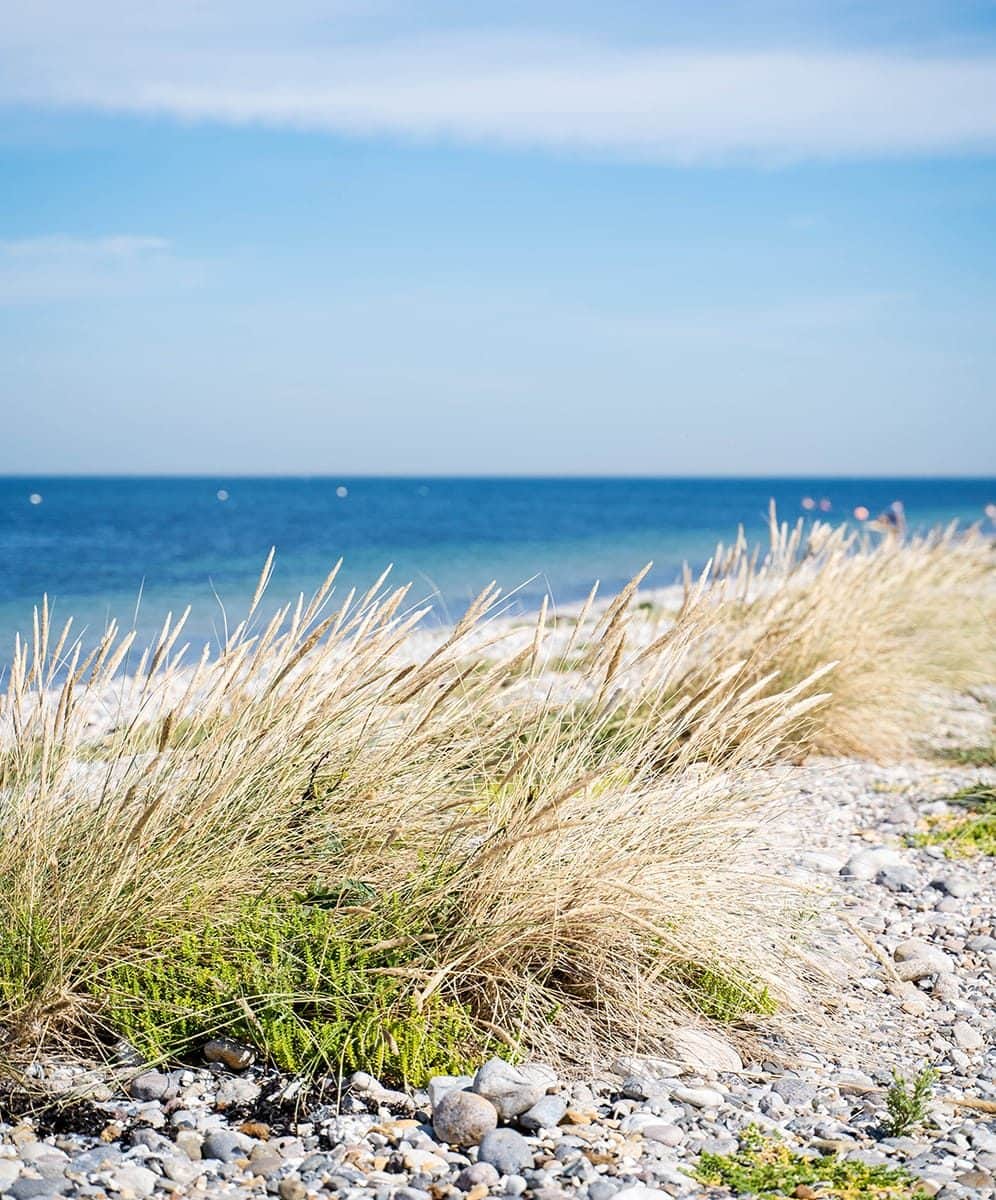
What you'll find on the beachstones, birds, evening light
Collecting stones and shells
The stones here are glacial erratics: ice-age glaciers pushed them down from Scandinavia. Belemnites are fossilised squid from the Cretaceous, finger-length and pointed at one end. Add flint, hag stones and, with some luck, amber. You just have to walk slowly enough.
The waterfowl reserve
The NABU site borders directly on the campsite. From the hides you get closer to the birds than you ever could from the dyke, because in there they can't see you. Opening hours and admission are set by NABU.
Sunset on the west coast
The beach faces west with no house and no tree in the way. The sun goes down into the water, a little differently every evening. Hence the name Sunset Coast.
Walks without end
Kilometres in either direction, and the further you go the fewer people you meet. The path to Bojendorf runs over the dyke, and that's where the dog beach is.
Before you set offin short
- Bring beach shoes: the beach is pebbles and stones, not sand
- The beach access is right by the site, a few steps over the dyke
- At the waterfowl reserve, please keep to the paths and dogs on the lead
- The dog beach is towards Bojendorf, also reachable over the dyke
- For the sunset it's worth being there half an hour early
- After storms there's seagrass along the tideline: that belongs here and isn't cleared away